
ABOUT
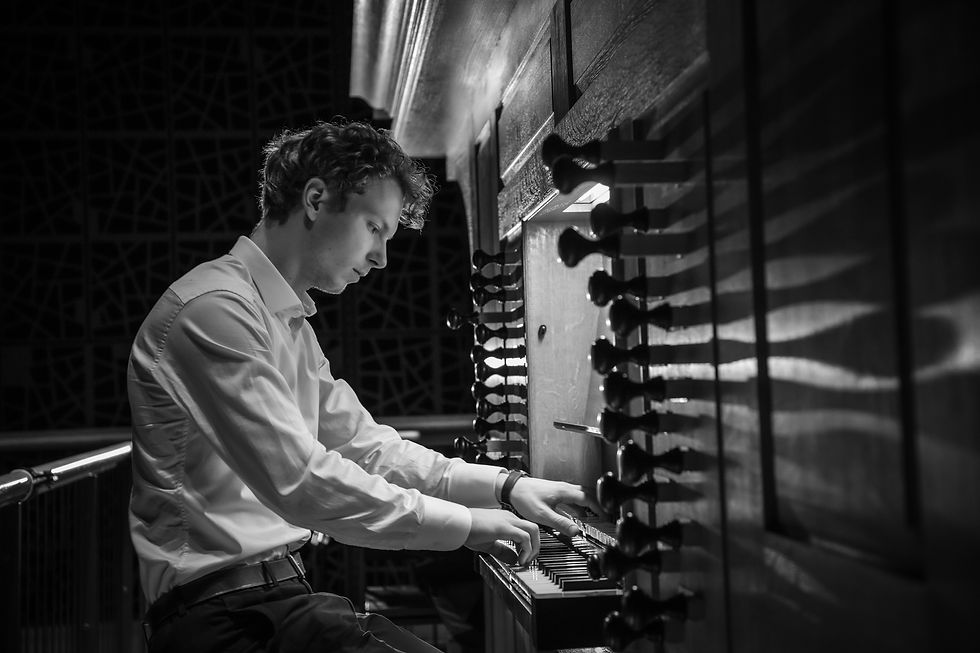
Eerik Ohtamaa (b. 2001) is a Finnish organist. He is originally from Kiiminki, in the Oulu region, where he received his initial musical training at the Oulu Conservatory. When he attended his first piano lesson, Eerik told his teacher that he intended to become an organist. This idea, expressed at the age of six, has stayed with him throughout his studies and guided him on his path towards a career as a professional musician.
Eerik’s playing is characterised by direct and expressive interpretation, as well as a strong interest in exploring the various possibilities of the organ. His repertoire spans several centuries, with the music of Johann Sebastian Bach holding a particularly central place in his work.
Eerik is an active concert organist and performs regularly in various ensembles, including with choirs and orchestras.
View CV


Selected Artistic Projects
J.S.Bach (1685-1750)
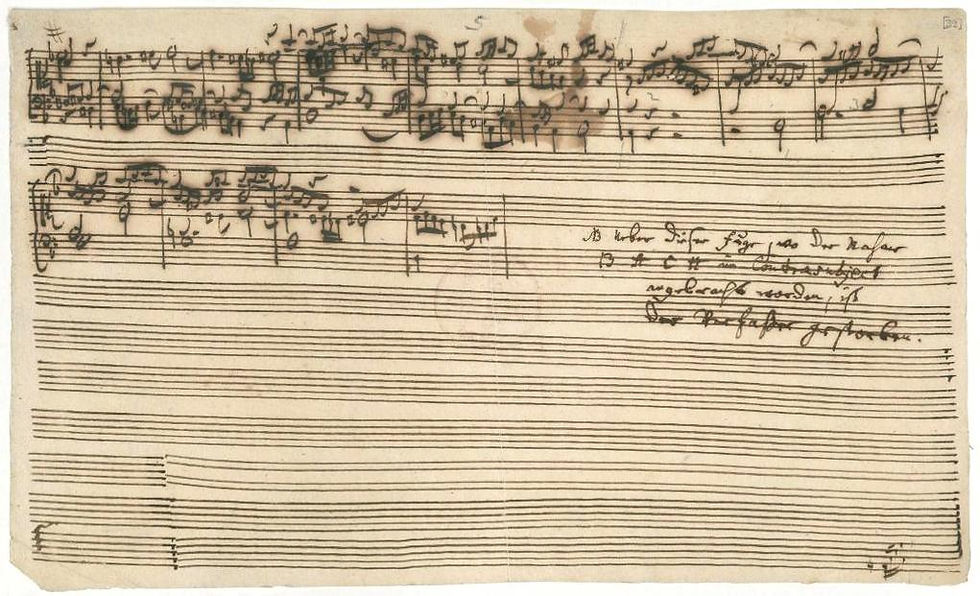
Die Kunst der Fuge, BWV 1080
Johann Sebastian Bach’s (1685–1750) Die Kunst der Fuge (The Art of Fugue) is one of the most significant works of his late period. It is, in a sense, a benchmark of fugal writing: a work that explores a single theme in a wide variety of ways. Die Kunst der Fuge consists of fourteen contrapuncti and four canons. It also includes two mirror fugues, bringing the actual number of fugues to sixteen. The definitive order of the pieces remains uncertain, partly because the first edition, published in 1751, contained numerous ambiguities and errors, and partly because the final, fourteenth contrapunctus was left unfinished.
It has been suggested that Die Kunst der Fuge may have been Bach’s third and final publication for the Mizler Society, which he joined in 1747. Members of the society were expected to contribute an annual scholarly publication until the age of 65. From this perspective, the Canonic Variations on the chorale Vom Himmel hoch, da komm ich her (“From Heaven Above to Earth I Come”), BWV 769, would have been his first such publication (1747). The next may have been Das Musikalische Opfer (The Musical Offering) in 1748, followed by Die Kunst der Fuge in 1749.
From a scholarly perspective, the intended purpose of the work is particularly intriguing. Bach wrote each voice on its own staff, suggesting that he may have conceived the work primarily as a study in counterpoint rather than as music intended for performance. Various interpretations of this have been proposed, yet the work as a whole is anything but dry fugue theory. The unfinished fourteenth contrapunctus culminates in the B–A–C–H motif, which can, in retrospect, be interpreted as the composer’s “signature” at the end of the piece.
There is no conclusive evidence as to which instrument or ensemble Bach intended for this collection of fugues. Today, The Art of Fugue is performed in a wide variety of instrumental settings. The work therefore offers considerable scope for adaptation and arrangement. When performed on the organ, the use of the pedalboard and the choice of stops become particularly significant. Thanks to its versatility, the organ of Naantali Church is exceptionally well suited to this purpose.
Concert at Naantali Church on 16 July 2026.
Watch:
Contrapunctus II
Watch:
Contrapunctus IX

Max Reger (1873-1916)
Drei Choralphantasien, Op. 52
Max Reger’s chorale fantasy trilogy is rarely performed as a complete cycle, even though the work is exceptionally rich in ideas and forms a coherent whole.
The first fantasy, “Alle Menschen müssen sterben,” is built around a descending interval (’todesmotiv’) symbolizing death. Lacking a fugue and at times fragmentary in form, it is the most structurally open of the three and paints a somber picture of life’s transience. Reger himself wrote in a letter to Karl Straube: “If any fatalities occur while listening to this ‘crime,’ I promise to cover the funeral expenses.”
The middle fantasy is based on the chorale “Wachet auf, ruft uns die Stimme.” The composer described its opening stillness as that of a cemetery, disturbed by flashes of lightning. Out of the silence emerges the chorale melody, which may be heard as the voice of a calling angel. Gradually, the music expands into a massive tumult, as the dead rise from their graves. A recurring rhythmic motif in the pedal symbolizes their movement. Before the concluding fugue in E major—a celebration of the elect—the music pauses in a contemplative mood, perhaps alluding to the message of the Last Supper.
The third fantasy is joyful in character, reflecting eternal praise and the glory of God. Its structure is clear: a brief introduction followed by variations on the chorale “Hallelujah! Gott zu loben” and a fugue. In itself, this clarity stands in marked contrast especially to the fragmentation of the first fantasy. As a whole, each part of the opus appears more “complete” than the previous one, as if progressing toward ultimate transfiguration.
Concert at St. Paul’s Church, Helsinki, on 16 March 2026.
Watch:
Alle Menschen müssen sterben”

C.Saint-Saëns (1835-1921)
Symphony No 3 in C Minor, op. 78
Listen:
Yle Areena
Reviews:
“...it was remarkable how well Rouvali and the young Finnish guest organist Eerik Ohtamaa managed to balance the parts despite the limited rehearsal time.”
— Harri Kuusisaari, Rondo, 6 August 2026
Info:
Mikkeli Music Festival
Philharmonia Orchestra
Santtu-Matias Rouvali, conductor
Eerik Ohtamaa, organ
Concerts:
Musiikkitalo, Helsinki on 5th August, 2026
Mikkeli Parish Church on 7th August, 2026
Image: Ville Hautakangas, Mikkeli Music Festival 2026
UPCOMING CONCERTS
